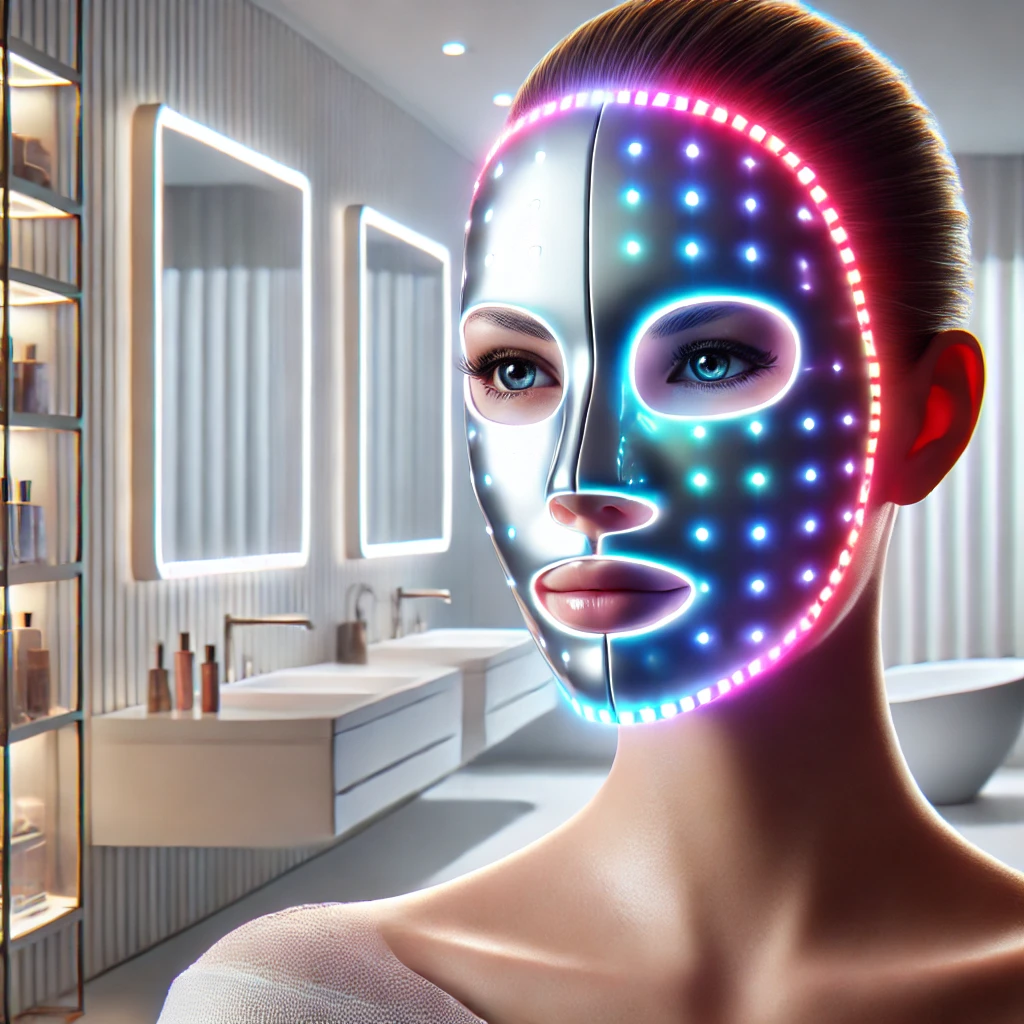


Are you looking for an effective solution to improve the condition of your skin, but don’t know where to start? LED masks, a cutting-edge technology inspired by professional treatments, promise impressive results, with a 70% reduction in signs of aging after just a few weeks of regular use. We’re going to find out in detail how these masks work, their different types of light and their effects on the skin, as well as practical advice on how to use them effectively at home.
Efficiency and types of LED lights
LED masks are more than just a beauty gadget. They use different wavelengths of light to target specific skin problems, each color having its own role. From anti-aging red to spot-fighting green to anti-acne blue, these little technological marvels promise impressive results. But what do the studies really say about their effectiveness?
Red light

Red light is the star of anti-aging LED masks. It works deep down to stimulate the production of collagen, the essential protein that keeps our skin firm.
But how does it work in practice? Wavelengths around 630 nm and 660 nm penetrate the dermis and awaken fibroblasts, the cells that produce collagen. The result? Firmer skin and progressively smoother wrinkles.
But that’s not all. Red light has other tricks up its sleeve:
- It improves healing, ideal after a minor boo-boo or cosmetic procedure.
- It evens skin tone for a more radiant face.
- It even reduces the risk of sunburn. Handy for preparing your skin for the vacations!
But don’t expect miracles overnight. To see results, you need to be patient and regular. Allow 8 to 10 weeks for treatment, with a minimum of 2 sessions per week.
A little tip to boost the effects: apply your favorite cream just before using your LED mask. The light will help the active ingredients penetrate deeper into the skin.
When choosing your mask, you need to be careful. A good device should allow direct contact between the light and the skin. Beware of low prices, which may conceal poor-quality LEDs.
Blue light
Blue light is a real ally in the fight against acne. It acts directly on two fronts: regulating sebum and eliminating the bacteria responsible for pimples.
Wondering how it works? Well, it’s quite simple. Blue light penetrates the skin and specifically targets the P. acnes bacteria, the main culprit behind acne. It eliminates it without damaging surrounding tissue. At the same time, it helps regulate sebum production, reducing the appearance of new pimples.
The results are quite encouraging. One study showed that after 12 weeks of daily use, over 75% of participants saw a marked improvement in their acne. That’s pretty good, isn’t it?
But regularity is key. For best results, use your LED mask every day or two, for one or two months. Fifteen minutes per session is usually enough. The morning is a good time for this, as it energizes the skin for the day.
A word of advice: if you use anti-acne skincare products, apply them before or after the blue light session. It may help them penetrate more effectively.
Finally, don’t forget to protect your eyes. The light is intense and can be dazzling. A good mask should include protection, but if in doubt, close your eyes during use.
Other types of LED lights
Beyond red and blue, LED masks offer a palette of colors with varied benefits. Violet, combining wavelengths of 415 and 630 nm, tackles rosacea and eczema. Fighting pigmentation spots? Go for green. Cyan (415 + 520 nm) is your ally for evening out skin tone and treating psoriasis. Finally, amber light soothes stubborn redness.
These options broaden the scope of LED care. Each color targets specific problems, offering customized solutions. Don’t hesitate to consult a professional to determine which light is best suited to your skin.
These LED technologies are energy-efficient and long-lasting. They reach maximum brightness instantly, making them ideal for short, effective sessions. For those wishing to optimize their beauty routine at home, it may be worth turning to Beauty Tech devices for at-home skincare, which combine technological innovation with professional care. As with any new skincare routine, start slowly and observe how your skin reacts.
Tips for using LED masks
Using an LED mask is simple, but there are a few points to bear in mind to get the most out of it. Here’s what you need to know:
Start with clean skin. Before each session, cleanse your face thoroughly. Remove any make-up or skincare products. Your skin must be clean and dry for the LED light to penetrate effectively.
Frequency of use is important. For best results, use your mask 2-3 times a week. Some even recommend daily use for the first few weeks to treat specific problems such as acne or wrinkles. Then switch to 1 or 2 sessions a week to maintain the benefits.
Each session lasts approximately 15 to 20 minutes. This is the ideal time for the light to act without overexposing your skin. Don’t exceed this time, even if you’re tempted to do so to speed up results.
Here are the steps to follow for an effective session:
- Clean your face.
- Turn on your mask and choose the color that best suits your needs.
- Place the mask comfortably on your face.
- Relax for 15 to 20 minutes.
- Remove the mask and apply your usual skincare if desired.
Remember, patience is key. Results are generally only visible after a few weeks of regular use. Some recommend following this rhythm: every other day for a month, with three cures a year and a one-month break between each cure.
Finally, listen to your skin. If you feel any discomfort or notice an unusual reaction, space out your sessions or consult a dermatologist. Every skin is unique and may react differently to light therapy.
With these tips in mind, it’s also crucial to choose the right LED mask for your specific needs. Product features vary considerably, and understanding these differences can make all the difference to the effectiveness of your treatment.
Precautions and contraindications for LED masks
LED masks are generally safe, but it’s important to remain vigilant. The good news is that they do not emit UV rays, making them safe for the skin. However, some people should avoid using them.
Who should abstain? Children, pregnant or breastfeeding women, and people with cancer. If you have an autoimmune disease or a pacemaker, it’s best to pass. The eyes are sensitive, so be careful if you have eye problems such as glaucoma.
Be aware of the medications you are taking. Some antibiotics or anti-inflammatories can make your skin sensitive to light. In this case, leave your LED mask aside. The same goes for creams containing photosensitizing ingredients. Check the label on your beauty products before using your mask.
How to use your mask safely Start by reading the instructions carefully. Each device has its own specific features. In general, 10 to 20 minutes a day is enough, a few times a week. Don’t overdo it: just because it tastes good, doesn’t mean it tastes better in large quantities!
Protect your eyes. LED light can be intense. Use the goggles supplied with your mask, or simply close your eyes during the session.
In doubt? Try a test. Apply the light to a small area of skin for a few minutes. If you feel any discomfort or reddening, stop immediately.
Finally, don’t hesitate to consult a doctor before buying an LED mask. This is particularly important if you have skin problems or are taking medication. A professional will be able to advise you and ensure that this technology is suitable for you.
In short, LED masks are safe for most people. But as with any skincare device, a little caution is in order. Listen to your skin, follow the instructions, and enjoy the benefits in peace.