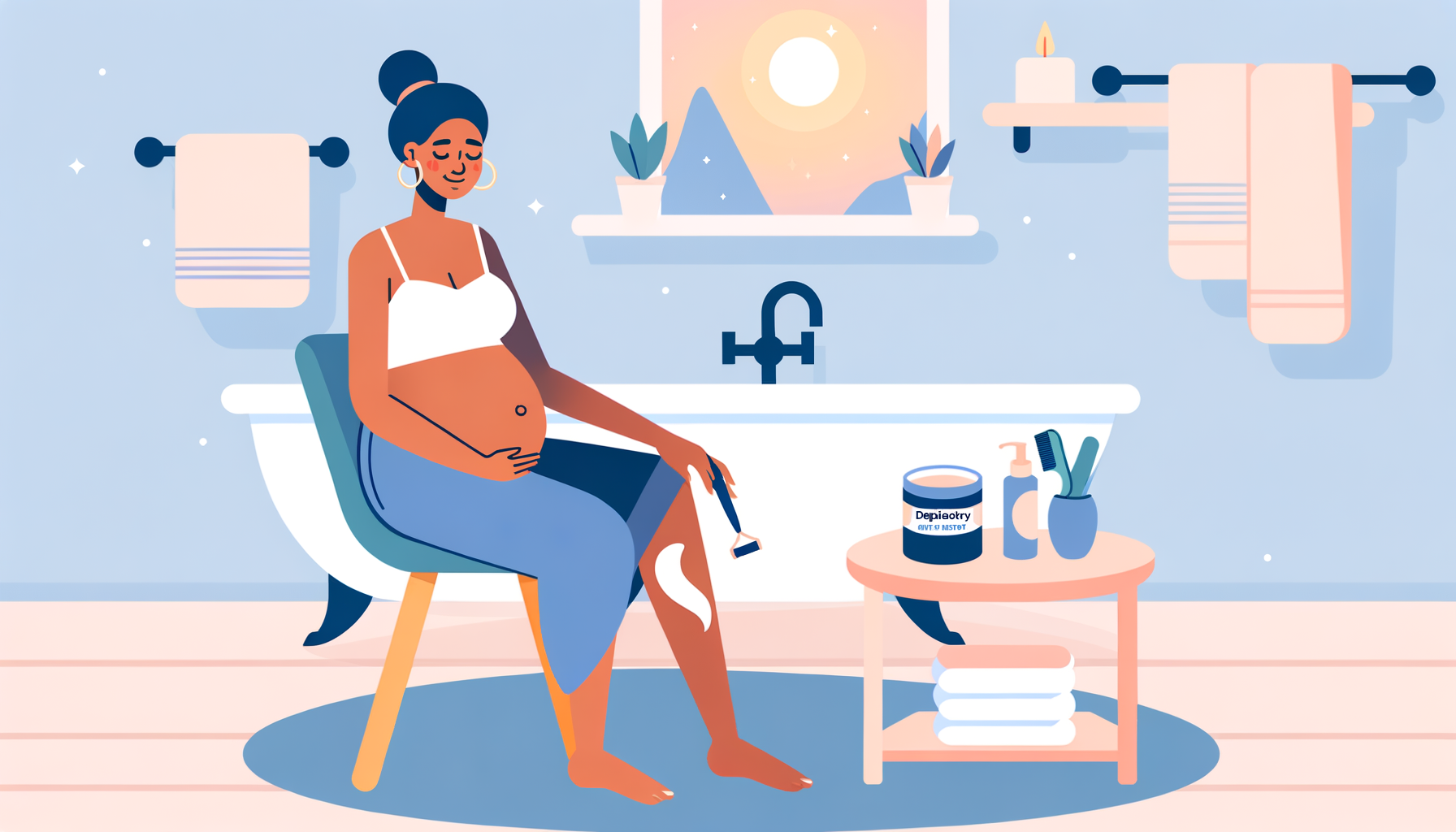


Are you wondering whether hair removal is safe during pregnancy? Did you know that some products may contain substances that are potentially harmful to you and your baby? In this article, we present the safest hair removal methods and the precautions you need to take to stay serene and well-depilated during these nine months.
Hair removal methods during pregnancy
During pregnancy, the skin becomes more sensitive and reactive due to hormonal changes. So it’s crucial to choose the right hair removal methods to avoid irritation and other discomforts. Here’s an overview of the options available and their specific features.
Razor
Razors are often the simplest and safest choice. It acts on the surface, limiting the risk of deep irritation. To minimize the risk of infection and irritation, use clean blades and shaving foam. Remember to change your disposable razor every five uses. A little tip: prefer razors with a lubricating strip for a smoother shave.
Depilatory creams and foams
These products may be practical, but beware of the ingredients. Depilatory creams contain chemicals that dissolve the hair, and some can be irritating or allergenic. Opt for gentle products, free from essential oils, and always test on a small area of skin before using them on larger surfaces. If you feel the slightest irritation, stop using immediately.
Wax
Waxing is effective, but can be painful, especially with more sensitive skin. Hot wax is not recommended, as it can cause burns and accentuate varicose veins. Cold or warm wax strips are preferable. If you’re not comfortable doing it yourself, consider waxing in an institute, especially at the end of pregnancy for hard-to-reach areas such as the bikini line.
Electric depilator
Electric epilators are another option, but can be painful and encourage ingrown hairs. It does, however, offer long-lasting, chemical-free hair removal. Be sure to clean your appliance regularly to avoid infections. If you’re sensitive to pain, this may not be the best option during pregnancy.
Laser and Intense Pulsed Light Hair Removal
These methods are not recommended during pregnancy. Hormonal changes can affect skin pigmentation, increasing the risk of burns and spots. In addition, there is insufficient data on the effects of these techniques on the fetus. It is therefore preferable to postpone these treatments until after childbirth.
Each hair removal method has its advantages and disadvantages, but it’s essential to take certain precautions to protect your skin and your health during this delicate period.
Precautions to be taken with the different methods
Each hair removal method has its own specificities and precautions to consider, especially during pregnancy. Whether you opt for razors, waxes or depilatory creams, it’s crucial to know the right practices to avoid irritation and other inconveniences. With Innerskin, you can be sure of choosing quality products tailored to your needs. Here’s a guide to help you choose and use each method safely.
Razor
Razors are often the simplest and safest choice for hair removal during pregnancy. Why is this? Because it works on the surface, limiting the risk of deep irritation. To avoid any inconvenience, here are a few practical tips:
- Use clean blades: A clean blade reduces the risk of micro-cuts and infections. Remember to change your disposable razor every five uses. Yes, it’s a bit more management, but your skin will thank you.
- Shaving foam or gel: These products aren’t just for show. They help the blade glide more smoothly over the skin, reducing the risk of cuts and bleeding. What’s more, they soften hairs, making shaving more comfortable.
- Shaving frequency: Rapid hair regrowth can mean frequent shaving. This is an inconvenience, but it also guarantees smooth skin without too many complications.
Depilatory creams and foams
Depilatory creams and foams may seem a practical solution for getting rid of hair painlessly. But beware: during pregnancy, skin often becomes more sensitive and reactive. These products contain hair-dissolving chemicals, some of which can be irritating or allergenic.
Before you get started, here are a few precautions to take:
- Check ingredients: Avoid products containing essential oils or potentially toxic substances. Opt for gentler versions, specially formulated for sensitive skin or pregnant women.
- Test before use: Apply a small amount of product to a limited area of your skin, such as your wrist or the inside of your elbow. Wait 24 hours to see if a reaction occurs. If you experience irritation, redness or itching, it’s best to avoid this product.
- Ask for advice: If you have any doubts, don’t hesitate to consult a healthcare professional or dermatologist. They will be able to guide you towards safe products adapted to your situation.
- Respect application times: Never leave cream or mousse on longer than recommended on the packaging. This could increase the risk of irritation.
Wax
Waxing during pregnancy can be effective, but there are a few precautions to take. First, hot wax is not recommended. It can cause burns and aggravate varicose veins, a common problem among pregnant women. Instead, use cold or warm wax strips, which are gentler on the skin.
If you find waxing too painful or difficult to do yourself, especially at the end of pregnancy, consider going to an institute. Aestheticians are used to treating sensitive skin and can reach hard-to-reach areas, such as the bikini line, without risk to you or your baby.
Electric depilator
Electric epilators are an option during pregnancy, but not without their drawbacks. This method can be painful, especially if your skin is more sensitive due to hormones. Epilators pull out hair at the root, which can cause acute pain, particularly in sensitive areas such as the underarms or bikini line.
Another point to consider is the risk of ingrown hairs. Electrolysis can encourage this phenomenon, especially if you already have a tendency to develop it. To minimize this risk, exfoliate your skin regularly to help the hairs come out properly.
Using an electric epilator can also accelerate hair regrowth. If you’re used to this method and find it bearable, continue to use it. If not, it may be a good idea to explore other, less painful options during this period.
Finally, be sure to clean your appliance after each use to avoid infections. A clean epilator is essential for maintaining good hygiene and protecting your skin. If you have any doubts or questions, don’t hesitate to consult a healthcare professional for advice tailored to your situation.
Laser and Intense Pulsed Light Hair Removal
Laser and Intense Pulsed Light hair removal may seem an ideal solution for getting rid of hair in the long term. However, these methods are not recommended during pregnancy. Why not? Hormonal changes can make your skin more sensitive and prone to unpredictable reactions, such as burning or pigmentation spots. What’s more, there isn’t enough data on the effects of these techniques on the fetus, which adds a layer of uncertainty.
No studies have evaluated the potential risks of pulsed light or laser treatment during pregnancy or breastfeeding. Without such data, it is impossible to guarantee the safety of these methods for you and your baby. As a precaution, we therefore recommend postponing these treatments until after delivery.
If you’re considering permanent hair removal, it’s best to wait. After the birth of your child, you can consult a specialist to discuss your options. In the meantime, opt for safer, temporary methods such as razors or cold wax strips. You’ll have plenty of time to plan for permanent hair removal once your body has returned to hormonal balance.
When and how to get waxed before giving birth?
Waxing before childbirth is not compulsory, but certain situations may make it necessary. For example, if you’re having a scheduled Caesarean section, it’s often advisable to wax the top of the pubis a few days before the due date. Simply shave off a small strip of 2 to 3 cm. This reduces the risk of infection and facilitates the work of the medical team. In case of emergency, don’t worry, the midwife or nursing staff will take care of the waxing if necessary.
If you want to feel more at ease before giving birth, here are a few practical tips:
- Razor: This is a quick and easy option. Use clean blades and shaving foam to avoid irritation. Change disposable razors every five uses to minimize the risk of infection. If you have difficulty reaching certain areas, don’t hesitate to ask your partner for help.
- Clippers: Clippers can be a good alternative to avoid skin overheating. It can shorten hairs without pulling them out, which is less irritating for the sensitive skin of pregnant women.
- Wax: If you prefer wax, opt for cold or warm wax strips. Hot wax is not recommended, as it can cause burns and aggravate varicose veins. If you find waxing too painful or difficult to do yourself, especially at the end of pregnancy, consider going to an institute. Aestheticians know how to treat sensitive skin and reach difficult areas without risk to you or your baby.
- Electric epilator: Although this method is long-lasting, it can be painful and encourage ingrown hairs. If you’re used to this method and find it bearable, continue to use it. If not, it may be a good idea to explore other, less painful options during this period.
- Depilatory creams: These products are generally not recommended during pregnancy because of the risk of skin reactions. If you decide to use them, test a small area of skin and wait 24 hours to make sure there is no reaction.
Finally, don’t forget to moisturize your skin twice a day, especially after waxing. Use a gentle cleansing gel before waxing to prepare your skin and avoid irritation. Avoid laser and pulsed light treatment during pregnancy, as these methods are not safe for you and your baby.
What bikini waxing for childbirth?
Bikini waxing may be necessary, especially in the case of a scheduled Caesarean section. It is often advisable to remove hair from the top of the pubis, where the elastic band of the panties is located. A simple touch-up on a 2 to 3 cm strip is all that’s needed. Warm or cold wax is ideal for this sensitive area, as it minimizes the risk of burns and irritation.
Avoid razors, which can cause micro-cuts and infections, and laser hair removal, which is not recommended during pregnancy. Depilatory creams are an option, but should be used with caution. Always test a small area of skin for allergic reactions.
If you’ve had an episiotomy, wait until it’s completely healed before waxing your bikini line. For hard-to-reach areas, especially at the end of pregnancy, don’t hesitate to ask your partner for help, or consult an esthetician. In institutes, professionals are used to treating sensitive skin and can safely remove unwanted hair.
How do you shave your pubic area when you’re pregnant?
Shaving the pubis during pregnancy may seem like a challenge, but with a few tricks, it’s perfectly feasible and safe. Here’s how to avoid irritation and cuts:
- Get ready: Before you start, trim any excessively long hairs with a pair of scissors or clippers. This will make shaving easier and reduce the risk of tugging.
- Use a good razor: Opt for a clean, sharp razor. Dull blades increase the risk of cuts and irritation. If possible, choose a razor with a lubricating strip for a smoother shave.
- Apply shaving gel or foam: These products aren’t just for show. They help the blade glide over the skin better, reducing the risk of cuts and bleeding. What’s more, they soften hairs, making shaving more comfortable.
- Shave in the direction of hair growth: This minimizes the risk of cuts and irritation. If you have trouble seeing what you’re doing, use a mirror or ask your partner for help.
- Rinse and moisturize: After shaving, rinse the area with cool water to soothe the skin. Pat dry gently with a clean towel, then apply a fragrance-free moisturizer to avoid irritation.
- Wear loose-fitting clothing: After shaving, wear loose-fitting underwear and clothing to let your skin breathe and avoid chafing.
By following these steps, you can safely shave your pubic area during pregnancy. If you have any special concerns or medical problems, don’t hesitate to consult a health professional.